Technical Resource
Container Scams: How to Verify a Seller Before You Pay
Fraud in container trading is not sophisticated. It repeats a small number of patterns, and almost all of them fail the same basic checks. The problem is that those checks are rarely done, because a buyer under time pressure, a vessel to load, a project to supply, a price that expires tomorrow, skips them.
- 7
- Recurring fraud patterns
- 5
- Checks before any payment
- 20 min
- To verify any supplier
- 1 h
- Window to recall a transfer
How to use this guide
This guide sets out the patterns, the signals that give them away, and a verification procedure you can run on any supplier in about twenty minutes. It applies to us as much as to anyone else. If a seller refuses any step below, you have your answer.
The Seven Patterns
The seven patterns
Fraud in this market is not inventive. Select a pattern to read how it presents itself, what gives it away, and the single action that defeats it.
PATTERN 01 · HIGH FREQUENCY
Stock that does not exist
A seller offers units at an attractive price in a location that suits you, and asks for a deposit to secure them. The photographs look right. The stock list is detailed. Nothing exists.
What gives it away
The depot cannot confirm the units when you contact it yourself, using a number you found independently. The photographs appear elsewhere online. The seller resists putting you in direct contact with the depot, or supplies a “depot contact” whose email is a free webmail address.
What to do
Never pay a deposit against stock you have not had confirmed by the depot holding it, through contact details you obtained yourself.
PATTERN 02 · HIGHEST LOSS
Payment redirection
The costliest pattern by a wide margin, and the one that catches experienced buyers. The negotiation is real, the seller is real, the containers are real. Late in the process, often at the moment of invoicing, a message arrives announcing new bank details. It comes from an address that looks correct, sometimes from a genuinely compromised mailbox, and it refers accurately to the deal in progress.
What gives it away
The change is announced by email. The reason is plausible and slightly urgent: an audit, a bank migration, a frozen account. The new account is held in a name that is not the company's.
What to do
Treat any change of bank details as fraudulent until confirmed by voice, on a number you already had, not one contained in the message announcing the change. Serious counterparties expect this call and will not be offended by it.
PATTERN 03 · HIGH FREQUENCY
The cloned company
A real company's identity is copied wholesale: name, registration number, address, legal notices, sometimes entire pages of its website. The domain differs by one character, or uses a different extension. Emails come from that domain, so they pass basic checks.
What gives it away
The domain was registered recently, while the company it claims to be has existed for years. The phone number differs from the one on the genuine site. The registration number, when checked against the official register, belongs to a company whose contact details do not match those you were given.
What to do
Find the company independently, through the commercial register or a search, and contact it through the details published there, not those you were sent. If both are genuine, you lose two minutes. If not, you have just avoided the loss.
PATTERN 04 · ESCALATING
Fees to be advanced
The units are ready. Only a modest amount stands between you and release: a storage charge, a handling fee, a customs deposit, a “gate release” cost. It is always small relative to the transaction, which is what makes it easy to pay. Once paid, another appears.
What gives it away
The charge was not in the original offer. It is payable to the seller rather than to the depot or the authority supposedly levying it. The amount is small enough to seem not worth arguing about.
What to do
Any legitimate charge can be verified with the party that levies it. Verify it there, and pay it there.
PATTERN 05 · DOCUMENT FRAUD
The forged release order
You receive a release order or gate-out document. It carries a logo, a reference, a depot name. The depot has never issued it.
What gives it away
The depot does not recognise the reference. The document format differs from the depot's usual output. The contact details on the document do not match the depot's published ones.
What to do
Confirm every release directly with the depot before considering a transaction complete, and before releasing final payment.
PATTERN 06 · VERIFIABLE
Container numbers that do not check out
Container references follow ISO 6346: four letters, three identifying the owner, one identifying the category, six digits, and a check digit calculated from the rest. The check digit is not decorative. It is arithmetic, and a fabricated number almost never satisfies it.
What gives it away
The check digit is wrong. Or the number is valid but its owner prefix belongs to a lessor or line that has no relationship with the seller. Or several numbers in a list share an improbably regular sequence.
What to do
Validate the check digit on every reference you are given. Look up the owner prefix in the BIC code register. A seller offering units they do not own, from a prefix that is not theirs, owes you an explanation of the chain, and a legitimate trader has one.
PATTERN 07 · FIRST SIGNAL
A price well below the market
The oldest signal, and still the most reliable. Containers are a traded commodity with a narrow spread in any given location. A price materially below the market in that port is not a bargain; it is the cost of your attention.
What to do
Compare against two other quotes in the same location before engaging. If the gap cannot be explained by condition, age or a genuine repositioning need, treat it as the primary red flag.
On condition, age and pricing comparisons, see our CW vs WWT guide and the container buying guide.
The Verification Procedure
Five checks, twenty minutes, any supplier
Applied to any supplier, including one you have used before if something in the exchange has changed. Open a check to read how it is done.
Check-digit validator
A container reference carries its own proof
Three owner letters, a category letter, six serial digits, and a final digit calculated from the ten before it. A fabricated number almost never satisfies that arithmetic.
This runs in your browser, on the same validator our own import pipeline uses. Nothing you type leaves this page. A correct check digit is necessary, not sufficient: confirm the owner prefix and the depot as well.
Enter an eleven-character reference, for example CSQU3054383.
Red Flags
Nine signals, weighted
Tick the signals present in the exchange you are assessing. They are not equally serious, so each carries a weight, and the index reacts as you go.
Nothing flagged yetTick anything you have observed in the exchange. The score updates as you go.
0 of 9 signals flagged. Nothing is stored or sent.
- Bank details changed by email, whatever the reason given.
- Payment requested to a personal account, or to an account in a name other than the company you are contracting with.
- The depot cannot or will not confirm the stock.
- Container references whose check digit fails.
- A domain registered recently for a company said to be long established.
- Fees appearing after the offer was agreed.
- Pressure to decide today, with an offer expiring tomorrow.
- Refusal to take a call on a published number.
- A price far below every other quote in the same port.
Legitimacy
What a serious supplier never refuses
A legitimate supplier has no difficulty proving any of this.
It is easier to identify a legitimate counterparty than a fraudulent one, because legitimacy shows in what a company accepts without argument.
| What you ask | A serious supplier |
|---|---|
| 01Its registration | Will let you verify its registration |
| 02A telephone call | Will take your call on its published number |
| 03The depot | Will put you in touch with the depot |
| 04The account | Will invoice from and be paid into an account in its own name |
| 05Bank details | Will confirm any change of bank details by telephone first, on a number already published, before those details can be used for payment |
None of these requests is unusual. None costs the supplier anything. A hesitation on any of them is itself the answer, and it is the fastest test in this guide.
If You Have Already Paid
Act in hours, not days
Recovery depends almost entirely on how fast the first call is made. The sequence below is ordered by the clock, not by importance.
- 01
Within the hour
- Contact your bank immediately and ask for a recall of the transfer. The chance of recovery falls sharply after the first day, and to near zero once the funds have been moved on. Do not wait for the seller to answer your emails first.
- Preserve everything. Full email headers, not forwarded copies. Bank references, invoices, chat logs, the domain name used. Evidence assembled in the first hours is worth more than anything reconstructed later.
- 02
Within 24 hours
- Report it to the police in your country, and keep the reference. Banks and insurers will ask for it, and a report is often what allows a receiving bank in another jurisdiction to act.
- Tell the depot and the prefix owner. If a depot or a lessor's containers were used as cover, they will want to know, and they are sometimes able to confirm quickly that the units were never held for that seller.
- 03
Within 48 hours
- Warn your own team. If a mailbox in your organisation was compromised, the same fraud is probably being attempted on your other suppliers.
Including Us
What to ask of any supplier
The checks in this guide are not adversarial. They are what any professional counterparty expects, and applying them costs a buyer twenty minutes against a transaction worth considerably more. The block opposite puts them in one message you can send before any transfer.
MG-Atlantic SA is registered in Switzerland under CHE-193.878.611, at Esplanade de Pont-Rouge 9A, 1212 Grand-Lancy, Geneva. The registration can be verified in the Swiss commercial register. Our telephone number is published on this site, and we will take your call on it.
We will never ask you to pay to new bank details on the strength of an email alone. If our banking details ever change, we will tell you by telephone first, and you will be able to confirm the new details by calling the number published on this site. Any message announcing new payment instructions without that call is fraudulent.
Ask the same of every supplier you deal with.
- Your legal name, registration number and registered address, as filed in your national commercial register.
- The name and direct telephone number of the person handling this transaction, on a number published by your company or by the register.
- Written confirmation that the invoicing entity and the bank account are in that same company name, and that your bank details never change by email.
- The depot holding the units, with its own contact details, so it can confirm the stock exists and is held to your account.
- The full ISO 6346 container references, with the owner prefix and how it relates to your company.
- The invoice from the contracting entity, and any release or gate-out document, so the issuing depot can confirm it.
Beyond supplier verification, MG-Atlantic also publishes documented payment defaults — cases of companies that received containers or container services and left invoices unpaid after formal notice. Resolved cases stay listed with their resolution.
Explore
Guides and resources
Container Buying Guide
Step-by-step guide to buying a shipping container: grades, inspection, delivery and pricing.
Read the guideCSC Plate Explained
What is a CSC plate, why it matters, and what to check before accepting a container for sea transport.
Read the guideBuying vs Leasing a Container
Full cost-of-ownership analysis and a decision framework to guide your procurement strategy.
Read the guide20DC vs 40HC: Which Format to Choose?
Dimensions, payload capacity, and cost-per-CBM comparison to select the right container format.
Read the guideSOC vs COC Leasing Explained
Understand the core difference between Shipper-Owned and Carrier-Owned container programs.
Read the guideNew vs Used Containers
Grade-by-grade analysis, price differentials, and practical fit criteria for equipment condition.
Read the guideCW vs WWT Containers
Compare Cargo Worthy (CW) and Wind & Watertight (WWT) shipping containers, inspection criteria, transport eligibility, storage suitability, US pricing and how to choose.
Read the guideOne Trip vs Cargo Worthy
One Trip vs Cargo Worthy shipping containers, lifespan, corrosion risk, appearance, ROI, US pricing and use cases to decide which grade fits your purchase.
Read the guideContainer Grades Explained
Understand the difference between New, IICL, CW, WWT and As-Is grades. Choose the right condition for your needs.
Read the guideContainer Size Guide
Compare 20ft, 40ft and 40HC dimensions, capacities and use cases. Find the right size for your cargo.
Read the guideOne-Way Leasing Explained
How SOC one-way leasing works, who it's for, and how it compares to round-trip leasing.
Read the guideContainer Types Explained
Overview of standard container formats including dry, high cube, reefer, flat rack, and open top containers.
Read the guideWhat a Container's Colour Tells You
Colour records who owned the box, not its condition — and what you must not paint over.
Read the guideShipping Container Delivery Guide
Step-by-step shipping container delivery guide for US buyers, truck access requirements, tilt-bed vs crane offload, common delivery issues and a pre-delivery site checklist.
Read the guideShipping Container Foundation and Site Preparation
How to prepare the ground for a shipping container: gravel pad, concrete piers or slab foundation, leveling, drainage and delivery-vehicle access.
Read the guideInland Container Depots: How They Work
What an inland depot does, how it differs from a port terminal, what it charges for, and how to choose one for pickup or drop-off.
Read the guideContainer Loading Calculator
Estimate the volume, weight and floor space of your items to compare a 20DC and a 40HC.
Read the guideShipping Container Ventilation and Condensation
Why containers sweat and how vents, desiccant and insulation keep stored goods dry.
Read the guideShipping Container Carports: Two Containers and a Roof
Spans, roof kits, clearance, anchoring and permits for a covered bay between two containers.
Read the guideCSC Certificate vs Seaworthy Certificate: What Each One Proves
CSC approval and seaworthy (cargo worthy) certificates answer different questions: who issues each, what they cover, how long they last, which you need.
Read the guideShipping Container Prices in the USA
Indicative ex-depot ranges by size, grade and city, reviewed monthly, and what a quote should include.
Read the guide
Explore
More market notes
 Market
One record from release to invoice: how MG-Atlantic runs its operations on Krak Stack
Leasing, trading, releases, returns and invoicing on one container record: why MG-Atlantic runs all of its container operations on Krak Stack.
Read the note Market
Why an international trader is opening a container shop in Switzerland
MG-Atlantic launches MG Container, its Swiss shop: new and used containers, to buy or to rent, delivered customs-cleared anywhere in Switzerland.
Read the note Market
September's Import Peak, and What It Leaves Inland
US imports were forecast to peak in September 2026. Where those boxes are emptied, why the inland pool of empties follows weeks later, and what it means for buyers.
Read the note Market
Panama Rations Transits, and Equipment Follows
The canal cut daily transits to 32 and lowered Neopanamax draft. What a water-driven restriction does to container repositioning, and where empties accumulate.
Read the note Market
What a Depot Actually Charges For
Gate fees, lifts, per-day storage, survey, cleaning, repair — what a container depot invoices, and why the same box costs more to keep in one port than another.
Read the note Market
Cape Routing and Container Availability
When vessels route around the Cape instead of through Suez, the equipment consequences outlast the schedule ones. What longer rotations do to container availability, and how to plan around them.
Read the note Market
Why Container Availability Differs by Port
Containers accumulate where cargo arrives and disappear where it departs. How trade imbalance shapes what you can actually collect, port by port.
Read the note Market
The Container Availability Calendar
Container supply moves on a predictable annual rhythm — pre-holiday export rushes, factory shutdowns, and the quiet weeks that follow. What to plan around.
Read the note
Explore
Container use cases by industry
 Use case
Construction & Civil Works
Secure tool storage, site offices, modular workshops, and temporary infrastructure for BTP and civil engineering projects.
Explore the use case Use case
Solar Energy & Off-Grid Installations
Containerized battery storage systems, remote site equipment housing, and renewable energy project logistics.
Explore the use case Use case
Events & Brand Activations
Pop-up venues, hospitality units, and modular retail spaces for temporary brand experiences and events.
Explore the use case Use case
E-Commerce & Last-Mile Logistics
Overflow inventory management, temporary fulfilment hubs, and seasonal storage capacity for e-commerce operations.
Explore the use case Use case
Export & Import Freight Operations
One-way leasing strategy for freight forwarders and NVOCCs. Reduce repositioning costs while maintaining fleet flexibility.
Explore the use case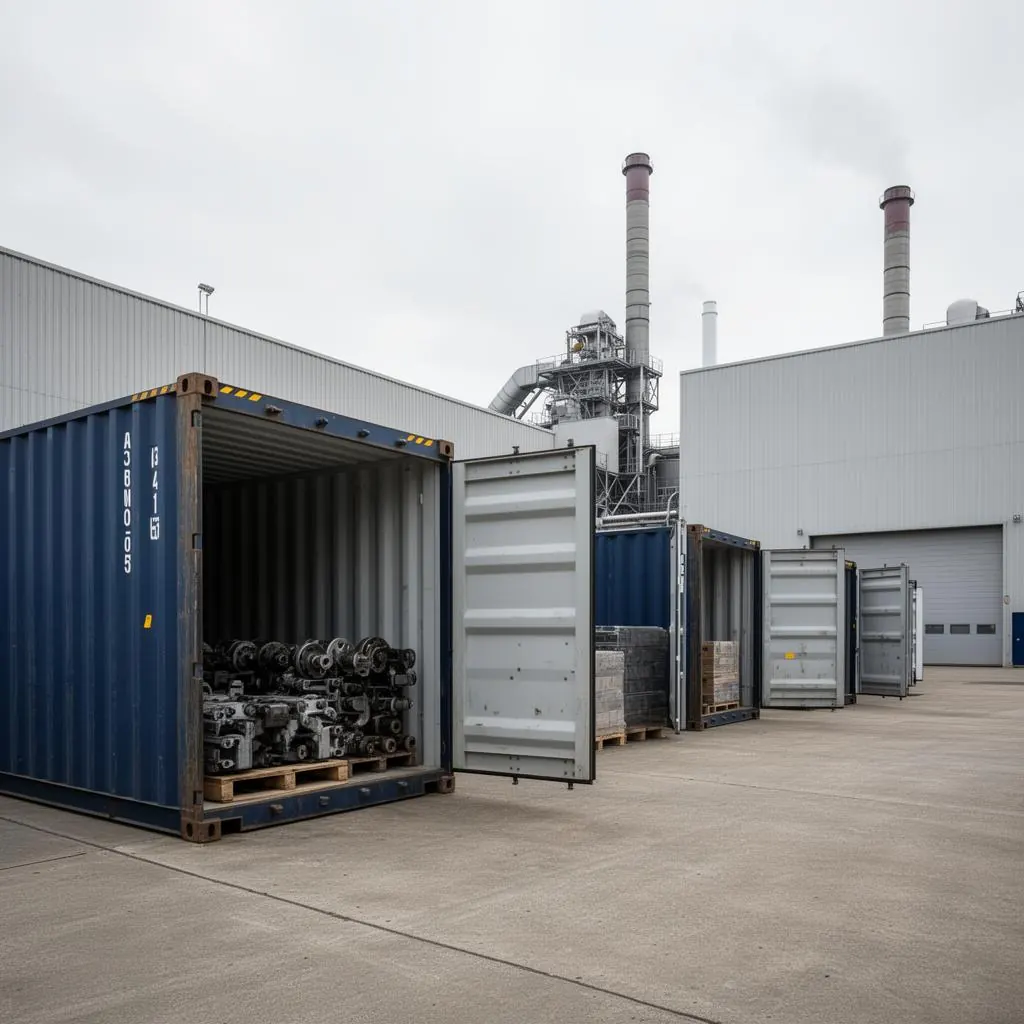 Use case
Industrial Storage & Depots
Long-term container deployments for industrial sites. Modular, scalable storage without permanent construction costs.
Explore the use case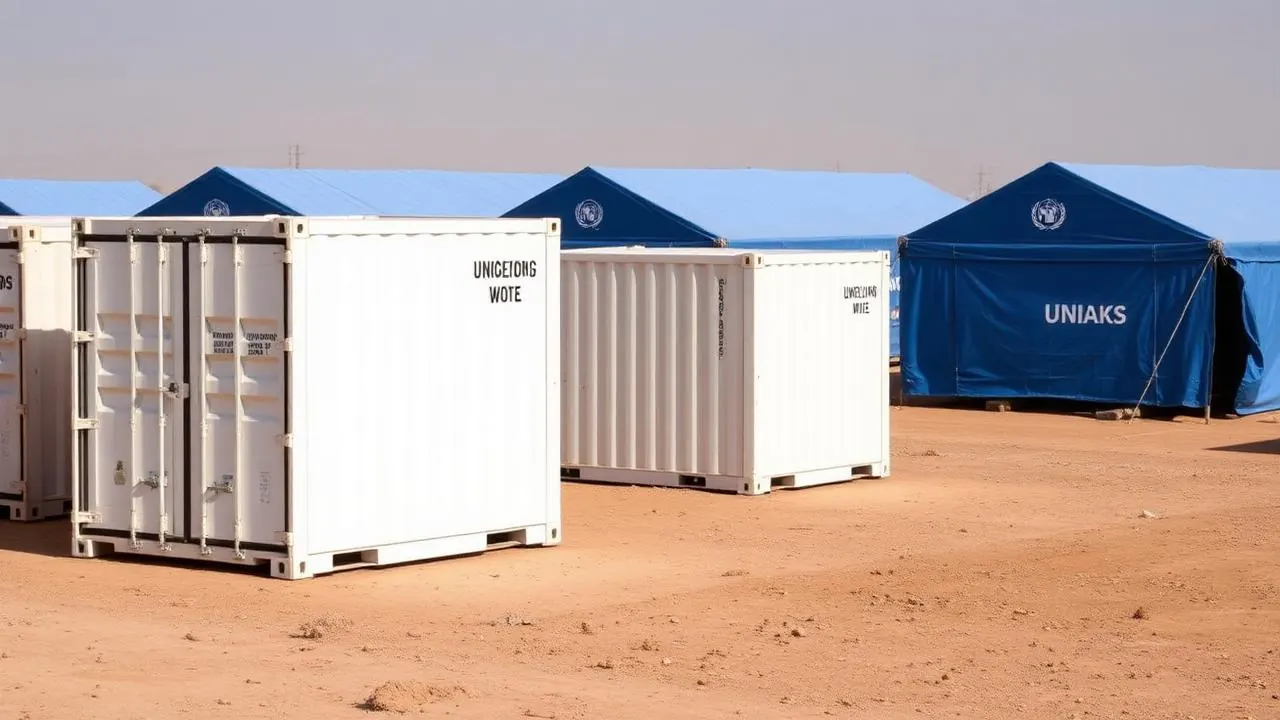 Use case
Humanitarian & Emergency Response
Rapid deployment container solutions for crisis zones, NGOs, and emergency logistics operations.
Explore the use case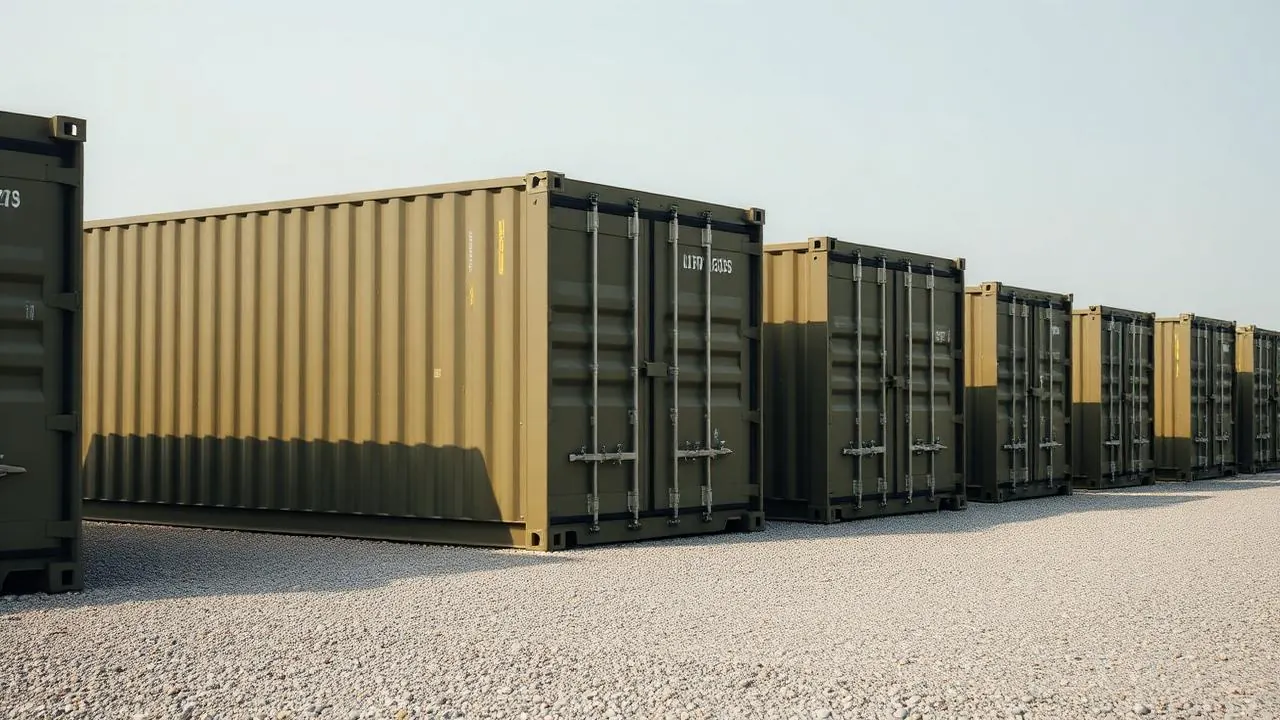 Use case
Military & Defense Logistics
Secure and reliable container solutions for defense operations and sensitive equipment transport.
Explore the use case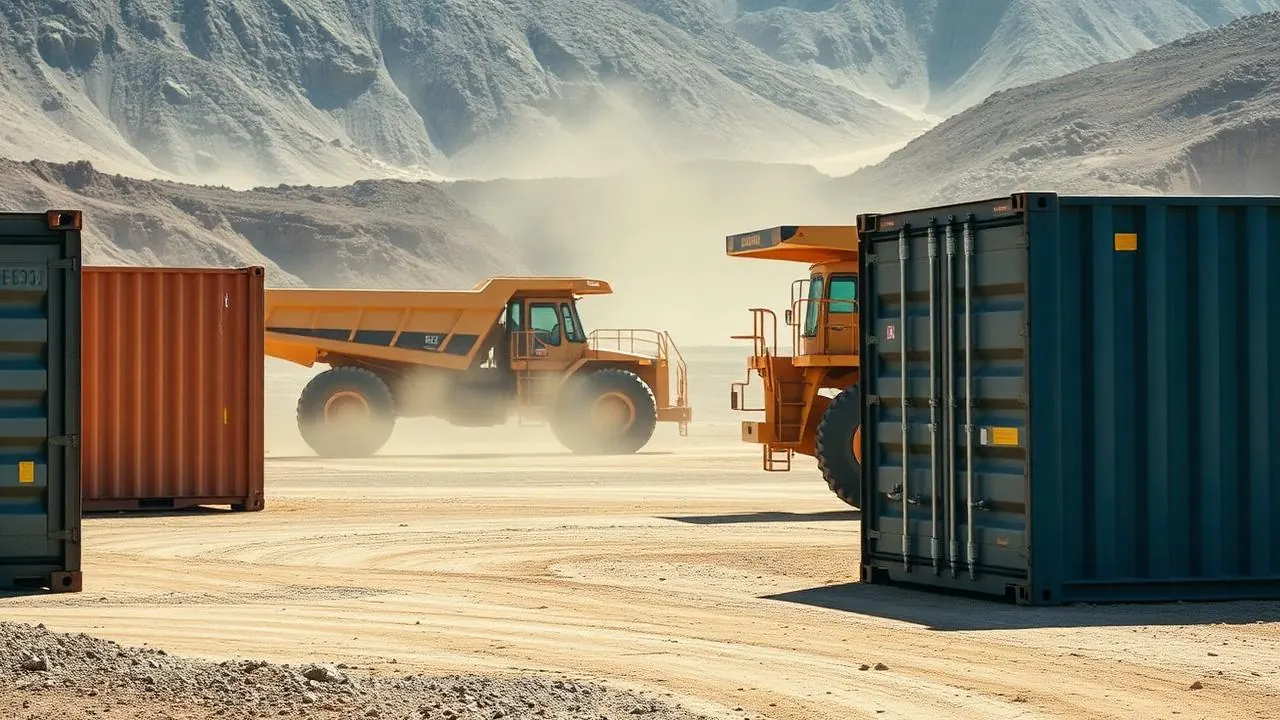 Use case
Mining, Oil & Gas Operations
Robust container solutions for remote industrial sites and harsh environment deployments.
Explore the use case Use case
Agriculture, Farms & Ranches
Lockable storage for feed, seed and tools, container barns and farm workshops.
Explore the use case Use case
Workshops, Garages & Sheds
Lockable steel space for tools and trades, motorbike and equipment garages, garden sheds and hobby workshops.
Explore the use case Use case
Cafés, Restaurants, Shops & Gyms
Container shells for coffee kiosks, small restaurants and bars, retail and pop-up stores and fitness studios.
Explore the use case