Shipping Containers for Events & Brand Activations
Shipping containers offer versatile, relocatable structures for pop-up retail, festival infrastructure, brand activations and temporary event spaces. Modular, weatherproof and fully customizable for premium brand presentation.
- Pop-up retail and brand experience spaces
- Festival bars, stages and production areas
- Secure on-site equipment storage
- Multi-event touring installations
Industry Context
The Events & Brand Activations Landscape
The events industry operates on extremely compressed timelines, venue access windows that leave no room for conventional builds, locations that change from one event to the next, and brand standards that demand flawless visual execution. Traditional event infrastructure involves complex builds, specialist contractors and significant waste, making modular alternatives increasingly attractive for organisers and brands seeking efficiency and sustainability.
From single-unit pop-up retail activations to multi-zone festival builds, event infrastructure must look premium, withstand outdoor conditions, travel between cities without degradation, and be stored compactly between seasons. Shipping containers meet all of these requirements while offering a distinctive industrial aesthetic that has become a recognisable design language in the events and experiential marketing space.
Operational Snapshot
Venue access windows leave no room for conventional builds
Presentation quality must remain brand-premium
Structures tour between cities and seasons
Best Fit Containers
20DC, Individual pop-up retail units
40HC, Large brand activation spaces
Operational Challenges
What Events & Brand Activations Operations Face
Understanding these challenges is essential for selecting the right container strategy.
Tight Build Schedules
Event venues often allow only hours or days for setup and teardown. Infrastructure must arrive pre-fitted, ready to position and open, with no on-site construction, welding or complex assembly required.
Brand-Quality Presentation
Activation spaces must meet the visual standards of premium brands, with customised finishes, lighting and interiors that create an immersive, Instagram-worthy customer experience aligned with brand identity.
Multi-Event Reusability
Event structures travel between cities, countries and seasons. They must withstand repeated loading, transport and repositioning without structural or cosmetic degradation over years of touring use.
Weather & Security Risks
Outdoor events expose high-value AV equipment, merchandise and production materials to rain, wind and theft. Lockable, weatherproof storage is essential throughout the full event lifecycle, from build to breakdown.
Scalable Event Footprint
Events range from a single pop-up unit at a trade show to a 50-container festival village. Infrastructure must be configurable, combinable and stackable to match any event scale and venue layout.
Container Solutions
How Containers Address These Challenges
Challenge
Tight Build Schedules
Event venues often allow only hours or days for setup and teardown. Infrastructure must arrive pre-fitted, ready to position and open, with no on-site construction, welding or complex assembly required.
Container Response
Pop-Up Retail Spaces
Containers are transformed into branded retail units, product showcases and immersive customer experience spaces with custom paint, vinyl wraps, windows, interior lighting and fitted displays. Each unit is fully self-contained and transportable by standard truck, enabling brands to deploy the same activation across multiple cities and events throughout the season without any structural modification between deployments.
Challenge
Brand-Quality Presentation
Activation spaces must meet the visual standards of premium brands, with customised finishes, lighting and interiors that create an immersive, Instagram-worthy customer experience aligned with brand identity.
Container Response
Secure Event Storage
Steel containers positioned on-site during event build and breakdown phases provide tamper-resistant, weatherproof storage for high-value AV equipment, staging materials, branded assets and merchandise inventory. Unlike temporary tents or open storage areas, containers offer lockable protection throughout the full event lifecycle, reducing the risk of theft, water damage and equipment loss between setup and teardown.
Challenge
Multi-Event Reusability
Event structures travel between cities, countries and seasons. They must withstand repeated loading, transport and repositioning without structural or cosmetic degradation over years of touring use.
Container Response
Modular Event Infrastructure
Containers are stacked, combined and configured to create bars, food courts, VIP areas, backstage zones, ticketing points and multi-level festival structures. Their modular nature allows organisers to design different layouts for each venue while using the same physical units, maximising return on investment and reducing waste compared to single-use traditional event builds.
Challenge
Weather & Security Risks
Outdoor events expose high-value AV equipment, merchandise and production materials to rain, wind and theft. Lockable, weatherproof storage is essential throughout the full event lifecycle, from build to breakdown.
Container Response
Rapid Deployment
Pre-fitted containers arrive at the venue as finished structures ready to position, significantly reducing on-site build work, contractor requirements and setup costs compared to traditional event structures. A single container can be positioned and connected as a complete unit, making them ideal for activations, touring programmes and events with strict venue access windows.
Equipment Selection
Recommended Container Types
20ft Dry Container
~33 m³ · ~28,000 kg payload
Typical Uses
- Individual pop-up retail units
- Equipment and merch storage
- Ticket offices and info points
Advantages
- Compact footprint for tight venues
- Easy single-truck delivery
- Quick positioning and removal
40ft High Cube
~76 m³ · ~26,000 kg payload
Typical Uses
- Large brand activation spaces
- Multi-zone event builds
- Festival bar and food service units
Advantages
- Walk-in height for customer comfort
- Maximum internal area
- Impressive visual presence
Recommended Container Grades
Cargo-Worthy · One-Trip
Cargo-Worthy (CW) / Used
- Equipment storage & site logistics
- Construction & industrial use
- Cost-effective, immediate availability
One-Trip / New Containers
- Client-facing infrastructure
- Long-term deployments & conversions
- Professional appearance & condition
Practical Applications
Real-World Use Cases
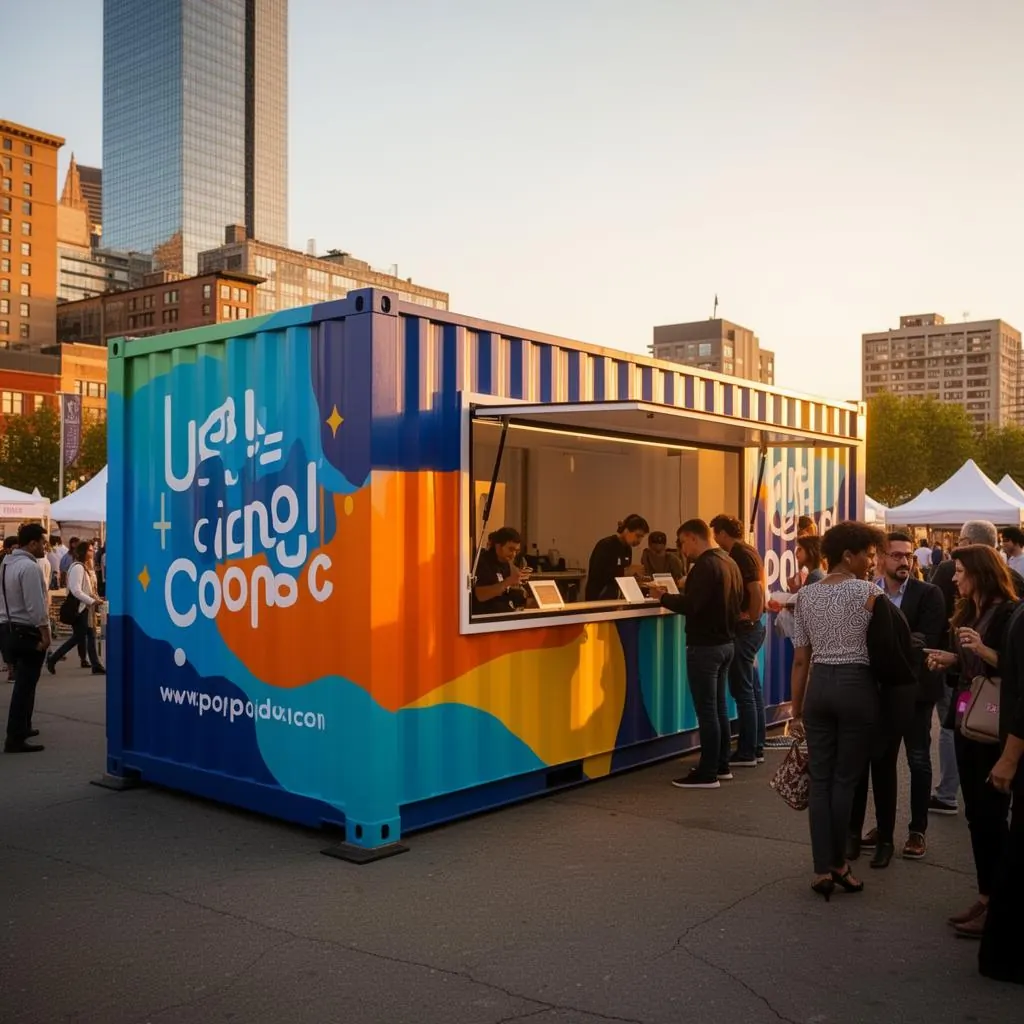
Brand Activation Pop-Ups
Custom-branded containers are deployed at festivals, trade shows and high-traffic urban locations as immersive product experience spaces. Each unit is fitted with windows, custom paint or vinyl wraps, interior lighting and product displays, creating a unique, Instagram-worthy space that draws attention and foot traffic. Because the container is fully self-contained, it can be transported between cities on a standard truck and repositioned at multiple events throughout the season without any structural modifications.
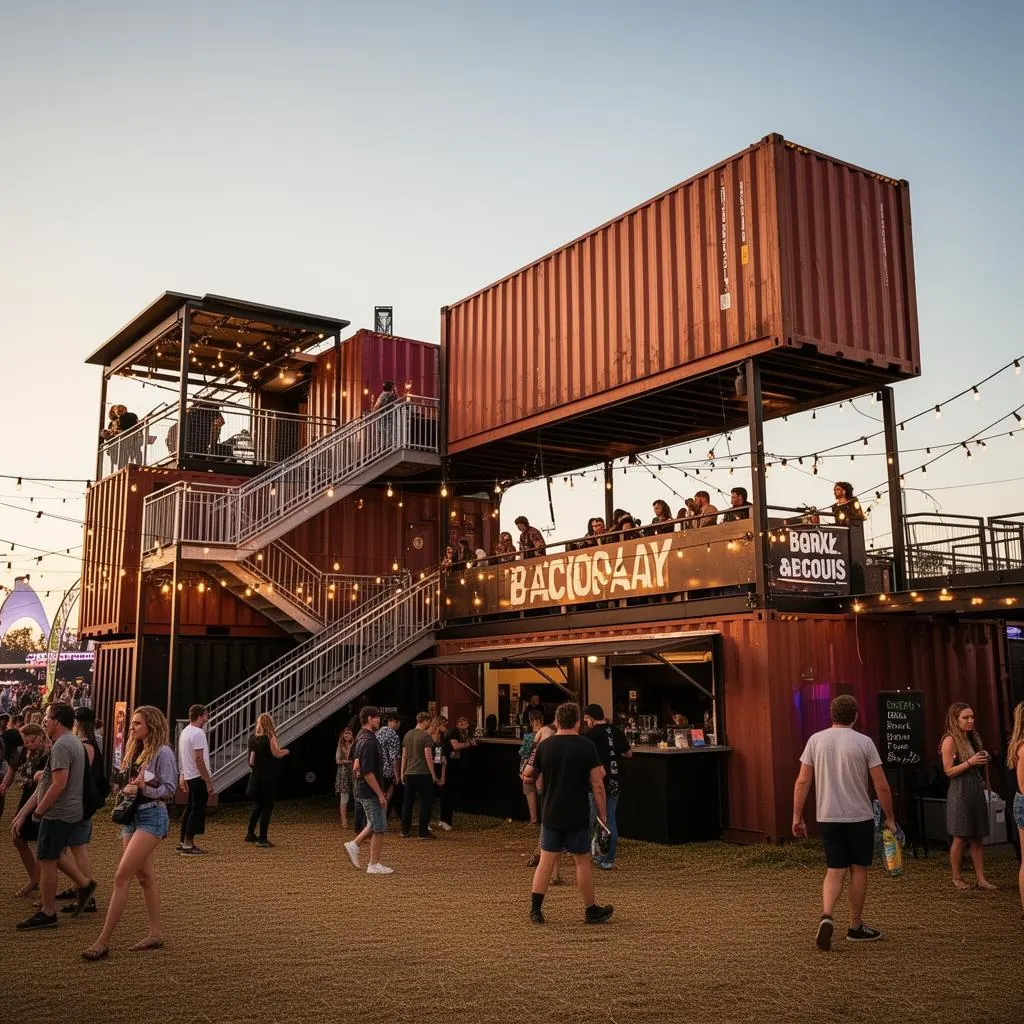
Festival Infrastructure
Container clusters form the backbone of festival operations, serving as bars, food courts, backstage areas, technical control rooms and VIP lounges. Their modular nature allows event organisers to configure different layouts for each venue, stacking units for multi-level structures or arranging them in open-plan configurations. Built from weatherproof steel, they withstand outdoor conditions across multiple seasons and can be stored between events without deterioration, making them a long-term investment for recurring festival programmes.
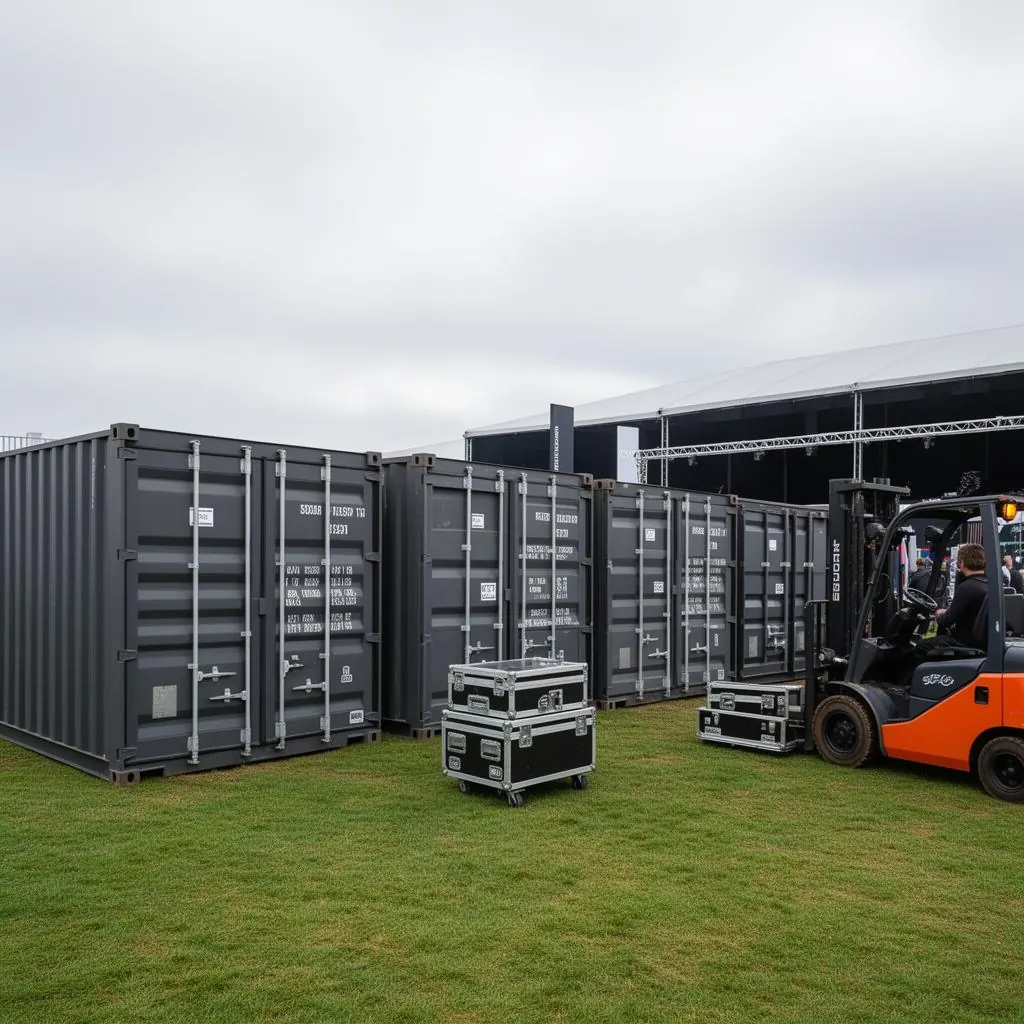
Secure Production Storage
Containers positioned on-site during event build and breakdown phases provide secure, lockable storage for high-value AV equipment, staging materials, branded assets and merchandise inventory. Unlike temporary tents or open storage areas, steel containers offer tamper-resistant protection against theft and weather damage throughout the full event lifecycle. Production teams benefit from having all equipment centrally stored and accessible, reducing setup time and minimising the risk of loss or damage during transport between venues.
Why MG-Atlantic
Why Companies Choose MG-Atlantic
Access to 20DC and 40HC containers at strategic depots across all major trade regions.
Worldwide container sourcing, trading and allocation across all major markets.
Fast logistics coordination to meet tight project timelines.
From new one-trip units to certified cargo-worthy equipment.
Common Questions
Frequently Asked Questions
Explore
Container use cases by industry
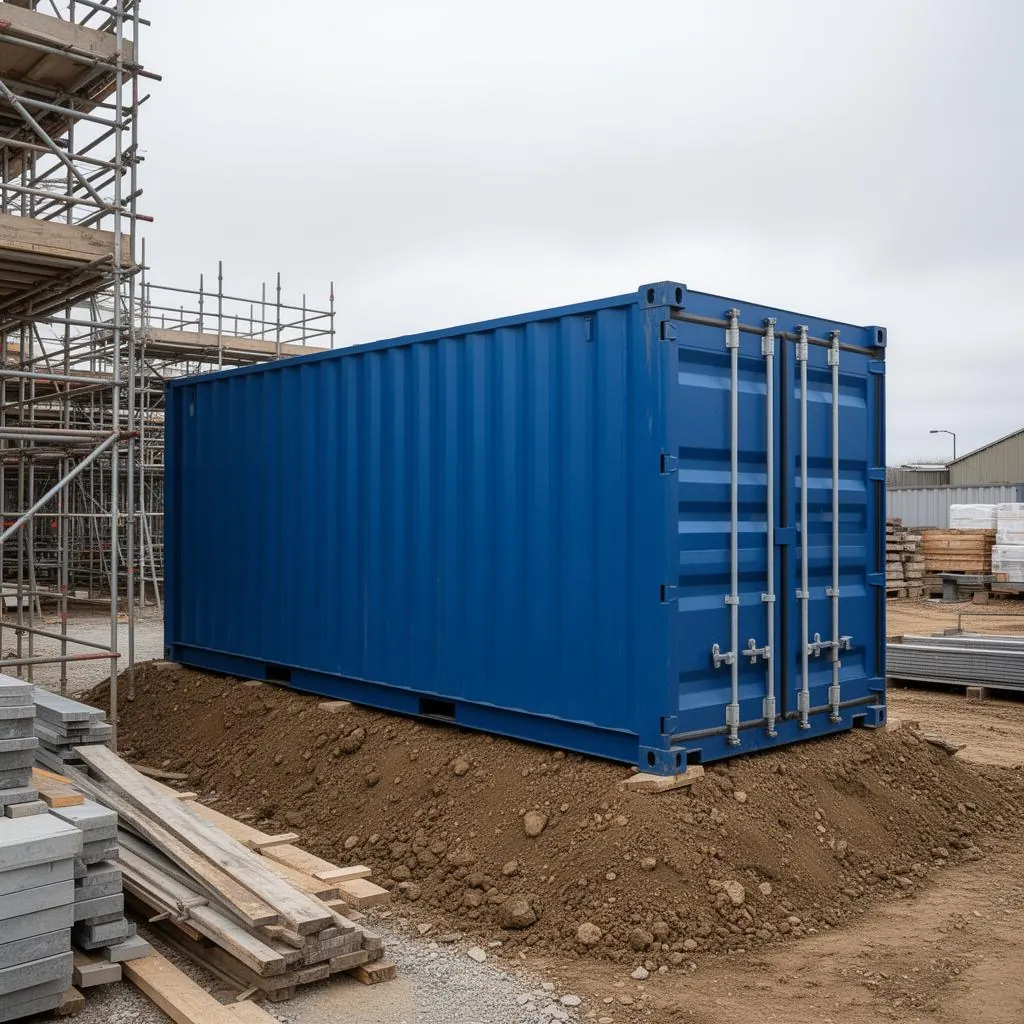 Use case
Construction & Civil Works
Secure tool storage, site offices, modular workshops, and temporary infrastructure for BTP and civil engineering projects.
Explore the use case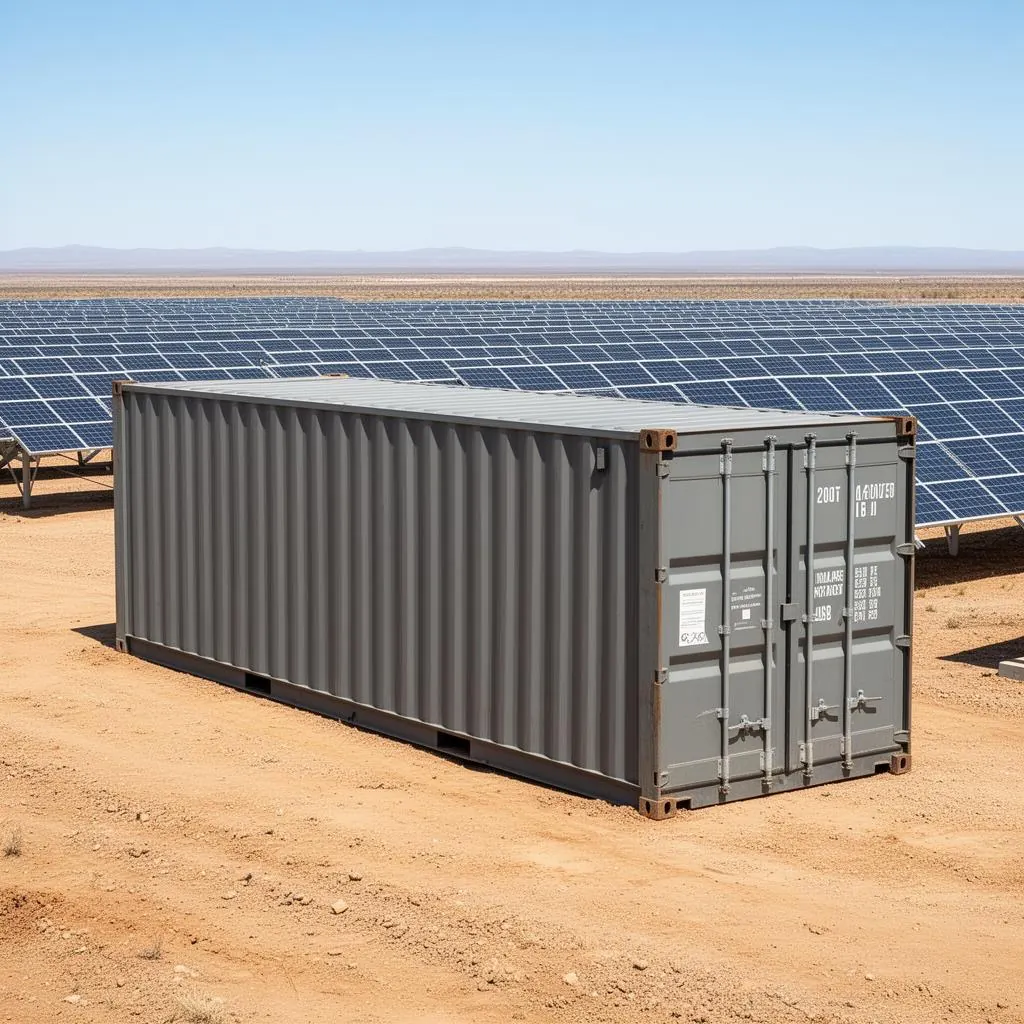 Use case
Solar Energy & Off-Grid Installations
Containerized battery storage systems, remote site equipment housing, and renewable energy project logistics.
Explore the use case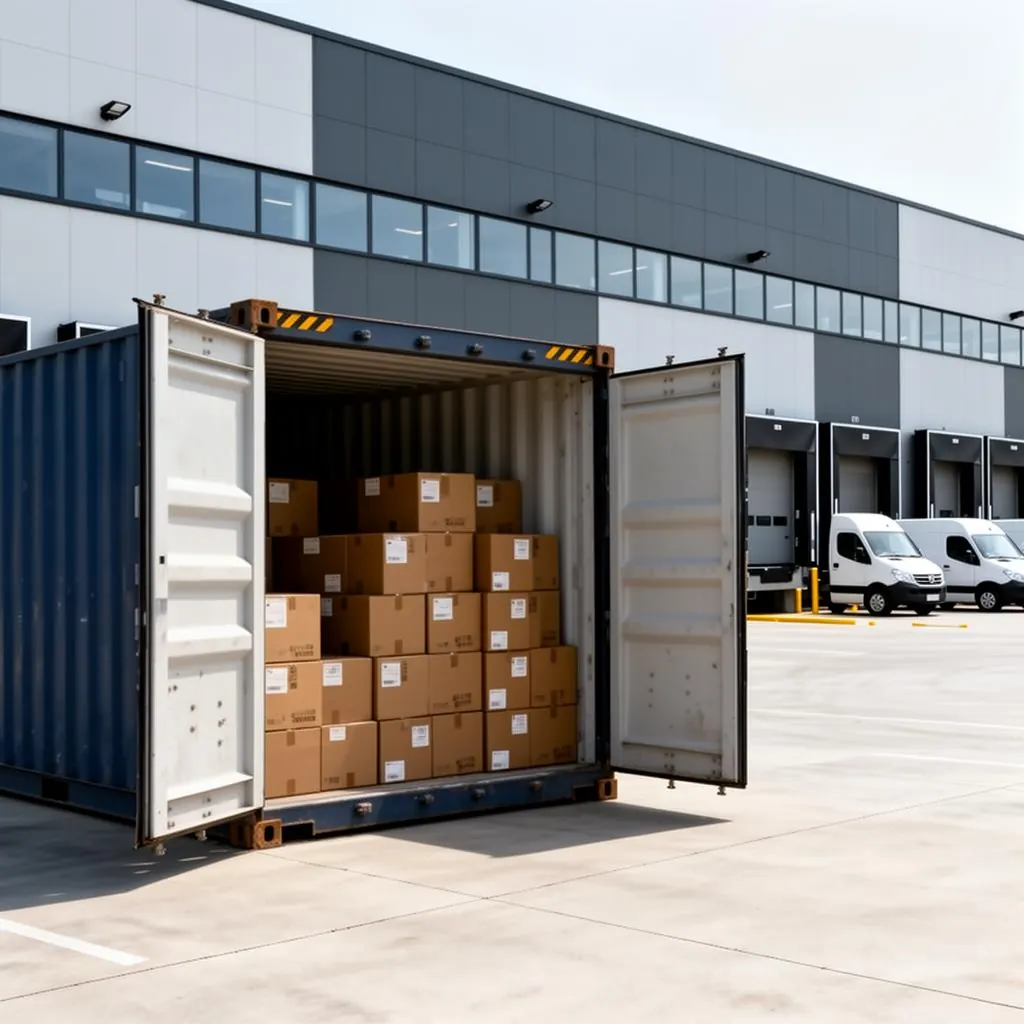 Use case
E-Commerce & Last-Mile Logistics
Overflow inventory management, temporary fulfilment hubs, and seasonal storage capacity for e-commerce operations.
Explore the use case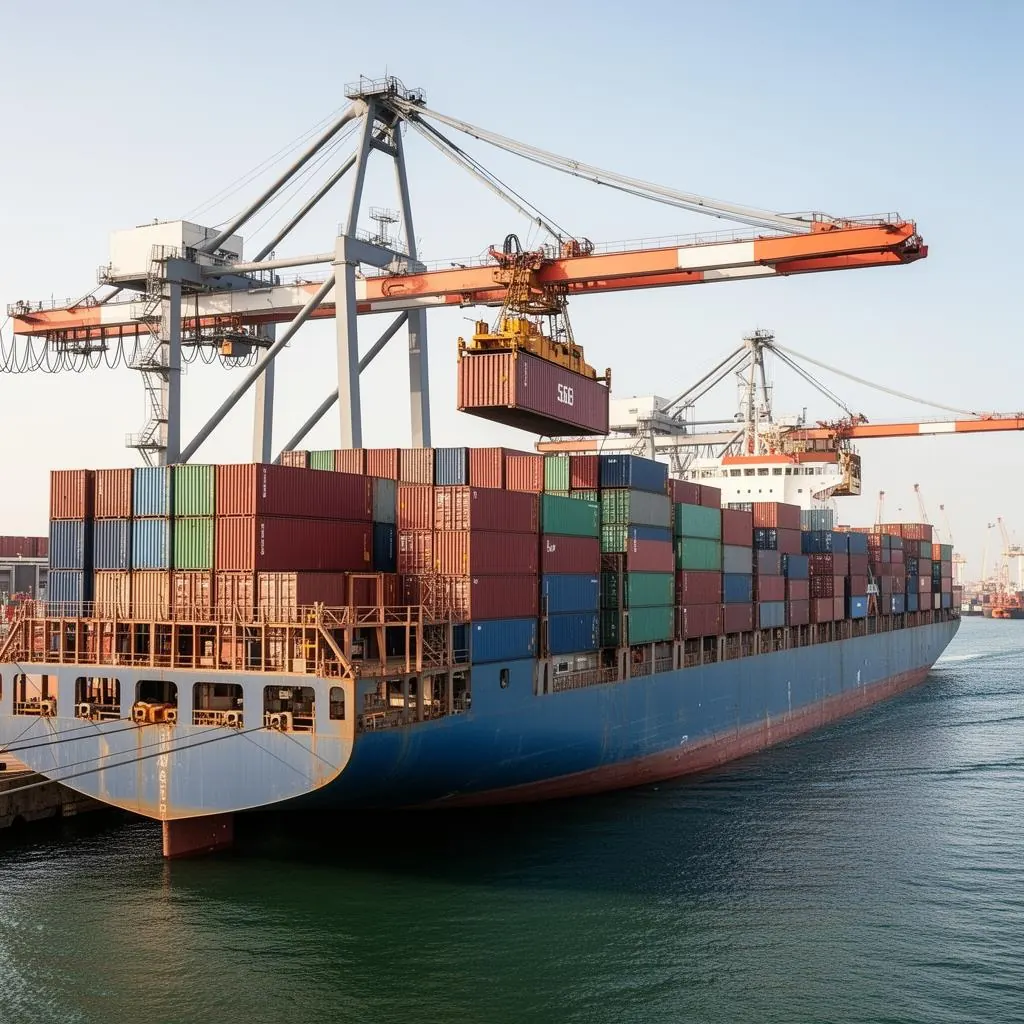 Use case
Export & Import Freight Operations
One-way leasing strategy for freight forwarders and NVOCCs. Reduce repositioning costs while maintaining fleet flexibility.
Explore the use case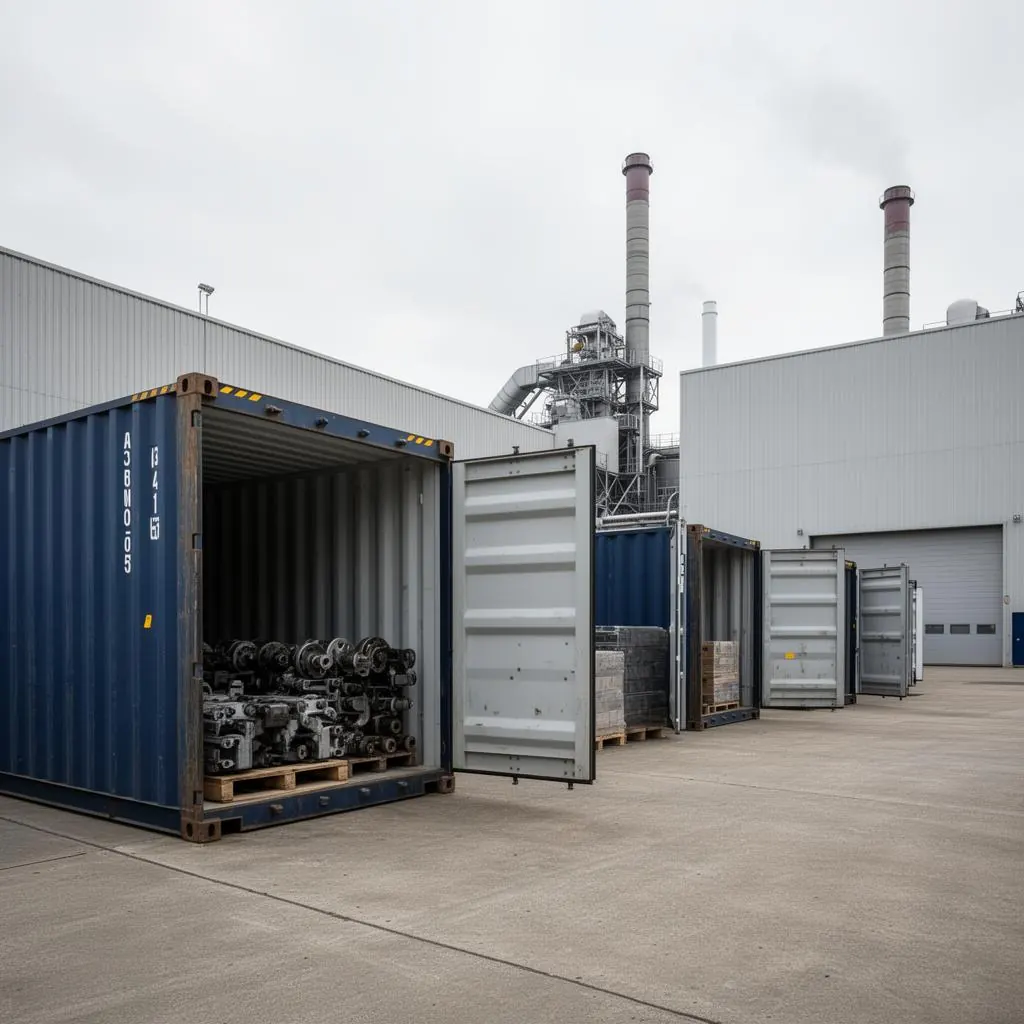 Use case
Industrial Storage & Depots
Long-term container deployments for industrial sites. Modular, scalable storage without permanent construction costs.
Explore the use case Use case
Humanitarian & Emergency Response
Rapid deployment container solutions for crisis zones, NGOs, and emergency logistics operations.
Explore the use case Use case
Military & Defense Logistics
Secure and reliable container solutions for defense operations and sensitive equipment transport.
Explore the use case Use case
Mining, Oil & Gas Operations
Robust container solutions for remote industrial sites and harsh environment deployments.
Explore the use case Use case
Agriculture, Farms & Ranches
Lockable storage for feed, seed and tools, container barns and farm workshops.
Explore the use case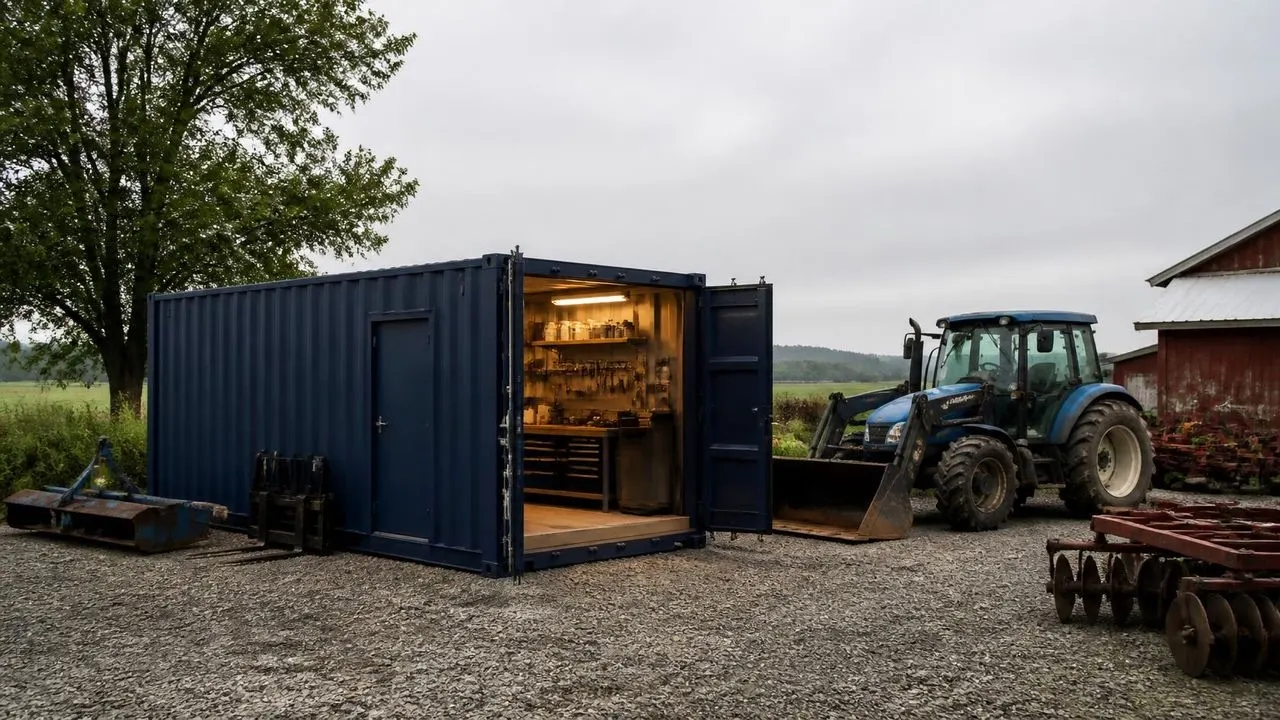 Use case
Workshops, Garages & Sheds
Lockable steel space for tools and trades, motorbike and equipment garages, garden sheds and hobby workshops.
Explore the use case Use case
Cafés, Restaurants, Shops & Gyms
Container shells for coffee kiosks, small restaurants and bars, retail and pop-up stores and fitness studios.
Explore the use case
Explore
Guides and resources
Container Size Guide
Compare 20ft, 40ft and 40HC dimensions, capacities and use cases. Find the right size for your cargo.
Read the guideContainer Grades Explained
Understand the difference between New, IICL, CW, WWT and As-Is grades. Choose the right condition for your needs.
Read the guideCSC Plate Explained
What is a CSC plate, why it matters, and what to check before accepting a container for sea transport.
Read the guideOne-Way Leasing Explained
How SOC one-way leasing works, who it's for, and how it compares to round-trip leasing.
Read the guideBuying vs Leasing a Container
Full cost-of-ownership analysis and a decision framework to guide your procurement strategy.
Read the guide20DC vs 40HC: Which Format to Choose?
Dimensions, payload capacity, and cost-per-CBM comparison to select the right container format.
Read the guideSOC vs COC Leasing Explained
Understand the core difference between Shipper-Owned and Carrier-Owned container programs.
Read the guideNew vs Used Containers
Grade-by-grade analysis, price differentials, and practical fit criteria for equipment condition.
Read the guideCW vs WWT Containers
Compare Cargo Worthy (CW) and Wind & Watertight (WWT) shipping containers, inspection criteria, transport eligibility, storage suitability, US pricing and how to choose.
Read the guideOne Trip vs Cargo Worthy
One Trip vs Cargo Worthy shipping containers, lifespan, corrosion risk, appearance, ROI, US pricing and use cases to decide which grade fits your purchase.
Read the guideContainer Buying Guide
Step-by-step guide to buying a shipping container: grades, inspection, delivery and pricing.
Read the guideContainer Types Explained
Overview of standard container formats including dry, high cube, reefer, flat rack, and open top containers.
Read the guideWhat a Container's Colour Tells You
Colour records who owned the box, not its condition — and what you must not paint over.
Read the guideShipping Container Delivery Guide
Step-by-step shipping container delivery guide for US buyers, truck access requirements, tilt-bed vs crane offload, common delivery issues and a pre-delivery site checklist.
Read the guideShipping Container Foundation and Site Preparation
How to prepare the ground for a shipping container: gravel pad, concrete piers or slab foundation, leveling, drainage and delivery-vehicle access.
Read the guideContainer Scams: How to Verify a Seller Before You Pay
The seven fraud patterns in container trading, the signals that give them away, and a twenty-minute verification procedure.
Read the guideInland Container Depots: How They Work
What an inland depot does, how it differs from a port terminal, what it charges for, and how to choose one for pickup or drop-off.
Read the guideContainer Loading Calculator
Estimate the volume, weight and floor space of your items to compare a 20DC and a 40HC.
Read the guideShipping Container Ventilation and Condensation
Why containers sweat and how vents, desiccant and insulation keep stored goods dry.
Read the guideShipping Container Carports: Two Containers and a Roof
Spans, roof kits, clearance, anchoring and permits for a covered bay between two containers.
Read the guideCSC Certificate vs Seaworthy Certificate: What Each One Proves
CSC approval and seaworthy (cargo worthy) certificates answer different questions: who issues each, what they cover, how long they last, which you need.
Read the guideShipping Container Prices in the USA
Indicative ex-depot ranges by size, grade and city, reviewed monthly, and what a quote should include.
Read the guide
Explore
More market notes
 Market
One record from release to invoice: how MG-Atlantic runs its operations on Krak Stack
Leasing, trading, releases, returns and invoicing on one container record: why MG-Atlantic runs all of its container operations on Krak Stack.
Read the note Market
Why an international trader is opening a container shop in Switzerland
MG-Atlantic launches MG Container, its Swiss shop: new and used containers, to buy or to rent, delivered customs-cleared anywhere in Switzerland.
Read the note Market
September's Import Peak, and What It Leaves Inland
US imports were forecast to peak in September 2026. Where those boxes are emptied, why the inland pool of empties follows weeks later, and what it means for buyers.
Read the note Market
Panama Rations Transits, and Equipment Follows
The canal cut daily transits to 32 and lowered Neopanamax draft. What a water-driven restriction does to container repositioning, and where empties accumulate.
Read the note Market
What a Depot Actually Charges For
Gate fees, lifts, per-day storage, survey, cleaning, repair — what a container depot invoices, and why the same box costs more to keep in one port than another.
Read the note Market
Cape Routing and Container Availability
When vessels route around the Cape instead of through Suez, the equipment consequences outlast the schedule ones. What longer rotations do to container availability, and how to plan around them.
Read the note Market
Why Container Availability Differs by Port
Containers accumulate where cargo arrives and disappear where it departs. How trade imbalance shapes what you can actually collect, port by port.
Read the note Market
The Container Availability Calendar
Container supply moves on a predictable annual rhythm — pre-holiday export rushes, factory shutdowns, and the quiet weeks that follow. What to plan around.
Read the note