Shipping Containers for Cafés, Restaurants, Shops & Gyms
Small businesses open in shipping containers because a steel unit gives them a shell on land that may never carry a permanent building: a shipping container café or coffee kiosk, a street-food stand or container restaurant, a bar, a retail or pop-up shop, a container gym. MG-Atlantic supplies the containers. Openings, glazing, insulation, electrics, plumbing, kitchen extraction, flooring, signage and compliance are done by the owner, a converter or a local builder.
- Cafés, coffee kiosks and takeaway counters
- Street-food stands, small restaurants and bars
- Retail stores and pop-up shops
- Gyms and fitness studios
Industry Context
The Cafés, Restaurants, Shops & Gyms Landscape
A small business needs a place to trade before it needs a building. Street-level premises in good locations are scarce, and their leases tie a new café, bar or gym to years of rent before the first customer walks in. Vacant plots, yards and car parks are often available on shorter terms, but there is nothing on them to trade from.
A shipping container provides that shell. It is a corten steel box built for ocean freight, delivered by truck and set down on prepared ground. Once a converter has cut and reinforced the openings, insulated the walls and run the services, it becomes a counter, a kitchen, a shop or a training room, and it can be moved if the lease ends or the location does not work. Event organisers use containers for activations that last a few days; this page is about businesses that trade from the same unit every day.
Operational Snapshot
Street-level premises are scarce and tie a new business to long leases
Vacant plots and car parks rent on short terms, with no building on them
A first location has to be tested before a permanent fit-out
Best Fit Containers
20DC, Coffee kiosk or takeaway counter
40HC, Container restaurant kitchen or bar
Operational Challenges
What Cafés, Restaurants, Shops & Gyms Operations Face
Understanding these challenges is essential for selecting the right container strategy.
Premises and lease commitments
Conventional retail space comes with a long lease, a fit-out that stays with the landlord and a location fixed from the first day. A container on a rented plot remains the business's own asset and can be moved to another site.
Heat, cold and condensation
Bare steel heats up in the sun, loses heat in winter and runs with water when warm, humid air meets a cold wall. Kitchens, busy bars and gyms produce a lot of moisture. Insulation, a vapour barrier and mechanical ventilation are part of every customer-facing conversion.
Openings and structure
Serving hatches, shopfront glazing and wide doors mean cutting the corrugated walls, which are part of the container's structure. Large openings must be framed and reinforced by a converter or an engineer, especially when units are joined or stacked.
Permits, food hygiene and fire safety
Planning permission, food-hygiene and fire-safety rules depend on the municipality, and they differ between a coffee counter, a bar and a gym. Check them before ordering, so the unit and its conversion are planned to meet them.
Presentation to customers
A customer-facing unit is judged on its exterior. Dents, repaired panels and old markings do not all disappear under paint. Most owners choose a one-trip unit, close to new, whose clean shell takes paint and signage well.
Container Solutions
How Containers Address These Challenges
Challenge
Premises and lease commitments
Conventional retail space comes with a long lease, a fit-out that stays with the landlord and a location fixed from the first day. A container on a rented plot remains the business's own asset and can be moved to another site.
Container Response
Cafés, coffee kiosks and takeaway counters
A 20ft container is the usual base for a shipping container café or coffee kiosk. Its floor of about 14 m² takes a counter, a coffee machine, refrigeration and stock behind one serving hatch. The converter cuts and frames the hatch in a side wall and adds a lockable shutter, so the unit closes securely at night. Water supply, drainage, power and the municipality's hygiene rules decide the final layout.
Challenge
Heat, cold and condensation
Bare steel heats up in the sun, loses heat in winter and runs with water when warm, humid air meets a cold wall. Kitchens, busy bars and gyms produce a lot of moisture. Insulation, a vapour barrier and mechanical ventilation are part of every customer-facing conversion.
Container Response
Container restaurants, street food and bars
A 40ft high cube offers about 28 m² of floor and 2.69 m of internal height, enough for a kitchen line, an extraction hood with its ducting above, and an insulated ceiling. A shipping container restaurant or bar often pairs a kitchen unit with a second container for storage, toilets or seating, joined on site by the converter. Extraction, gas, grease handling and fire separation are designed to local rules before work starts.
Challenge
Openings and structure
Serving hatches, shopfront glazing and wide doors mean cutting the corrugated walls, which are part of the container's structure. Large openings must be framed and reinforced by a converter or an engineer, especially when units are joined or stacked.
Container Response
Retail stores and pop-up shops
A shipping container retail store works along the length of the unit: glazing on one long side, shelving on the other, a door at one end. A 20ft unit suits a single product line or a container pop-up shop; a 40ft unit holds a full shop with a till area and a stockroom. The steel shell locks at night, which matters on a car park or an open plot.
Challenge
Permits, food hygiene and fire safety
Planning permission, food-hygiene and fire-safety rules depend on the municipality, and they differ between a coffee counter, a bar and a gym. Check them before ordering, so the unit and its conversion are planned to meet them.
Container Response
Container gyms and fitness studios
A shipping container gym needs height first. The internal 2.69 m of a 40HC, about 30 cm more than a standard unit, leaves room for an insulated ceiling, lighting and overhead movements. The container floor is a timber deck on steel cross-members, built for cargo rather than dropped weights, so the converter adds rubber flooring or a platform that spreads the load. Ventilation and cooling matter more here than in any other use: a full class warms a steel box fast.
Equipment Selection
Recommended Container Types
20ft Dry Container
~33 m³ · ~28,000 kg payload
Typical Uses
- Coffee kiosk or takeaway counter
- Pop-up shop or single-brand retail unit
- Stockroom or storage beside a larger unit
Advantages
- Fits small plots, yards and car-park bays
- Easy to move if the first location does not work
- A smaller shell to insulate, equip and heat
40ft High Cube
~76 m³ · ~26,000 kg payload
Typical Uses
- Container restaurant kitchen or bar
- Full retail shop with a stockroom
- Container gym or fitness studio
Advantages
- Internal height of 2.69 m for ceilings, ducts and overhead training
- About 28 m² of floor for a kitchen line or a training area
- Can be joined with other units by a converter
Recommended Container Grades
Cargo-Worthy · One-Trip
Cargo-Worthy (CW) / Used
- Equipment storage & site logistics
- Construction & industrial use
- Cost-effective, immediate availability
One-Trip / New Containers
- Client-facing infrastructure
- Long-term deployments & conversions
- Professional appearance & condition
Practical Applications
Real-World Use Cases

Coffee kiosk on a city plot
A one-trip 20ft container stands on a paved corner of a car park near an office district. The converter has cut a serving hatch with a lift-up awning into one long side, insulated and lined the interior, and fitted a counter, an espresso machine, refrigeration and a hand-wash sink. Power and water come from the site's connections. At closing time the awning is lowered, the shutter locks and the unit stays closed overnight.

Container restaurant and bar with a terrace
Two 40ft high cubes stand side by side on a former industrial yard. One holds the kitchen, with its extraction duct running up the rear wall; the other holds the bar, with wide glazed openings onto a timber terrace. The converter framed every opening in steel, and the municipality approved the extraction, fire-safety and hygiene arrangements before fit-out began.
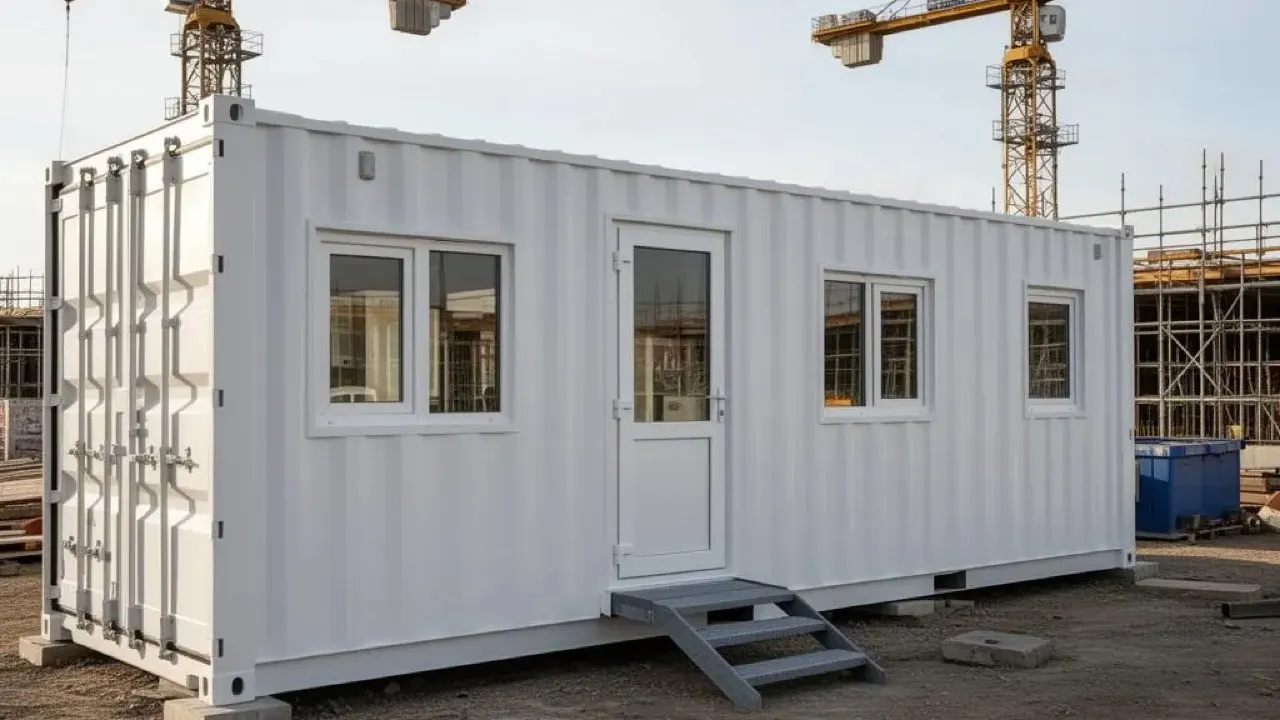
Container gym on a business park
A 40ft high cube with a glazed end wall and a personnel door serves as a small training studio beside an office building. Rubber flooring over a load-spreading platform protects the container floor, mirrors and storage line one wall, and an insulated ceiling sits within the extra height of the high cube. Mechanical ventilation and air conditioning keep the studio usable in summer and winter.
Why MG-Atlantic
Why Companies Choose MG-Atlantic
Access to 20DC and 40HC containers at strategic depots across all major trade regions.
Worldwide container sourcing, trading and allocation across all major markets.
Fast logistics coordination to meet tight project timelines.
From new one-trip units to certified cargo-worthy equipment.
Common Questions
Frequently Asked Questions
Explore
Container use cases by industry
 Use case
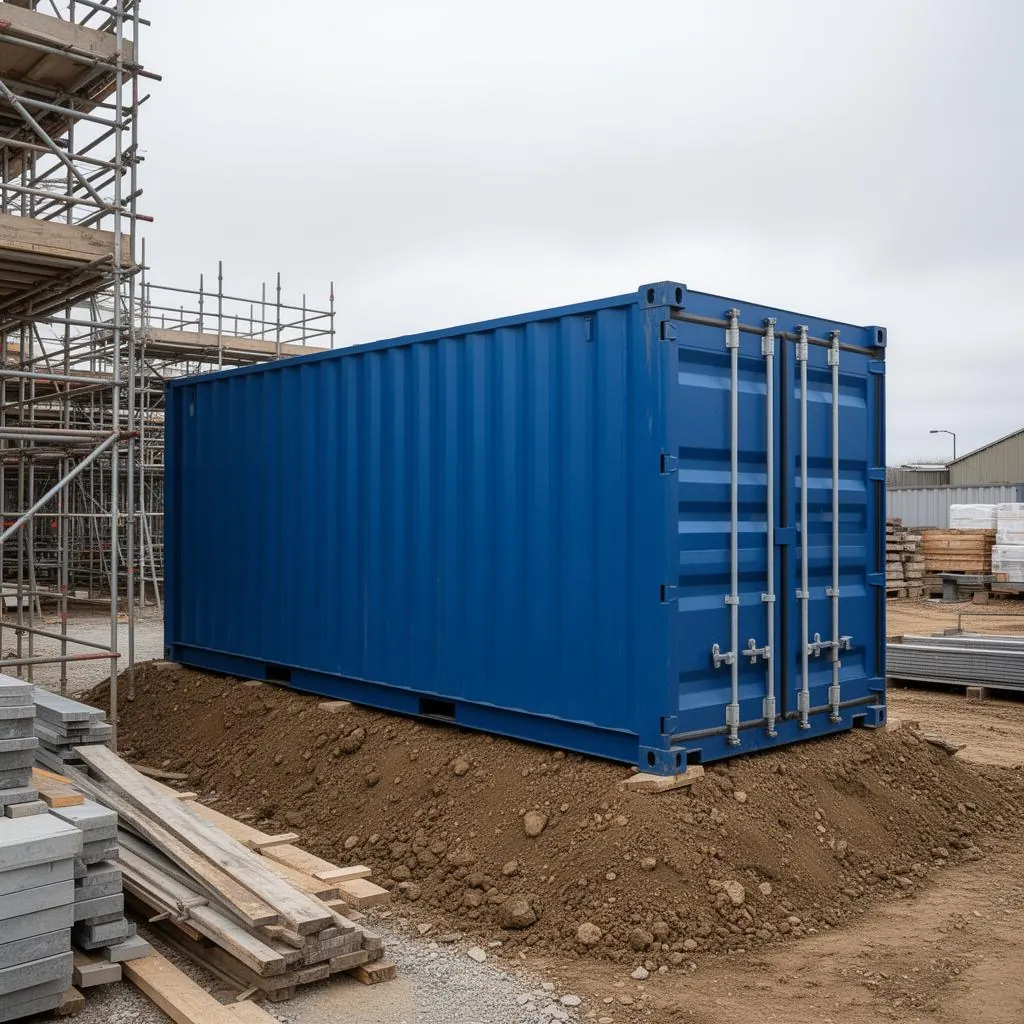
Construction & Civil Works
Secure tool storage, site offices, modular workshops, and temporary infrastructure for BTP and civil engineering projects.
Explore the use case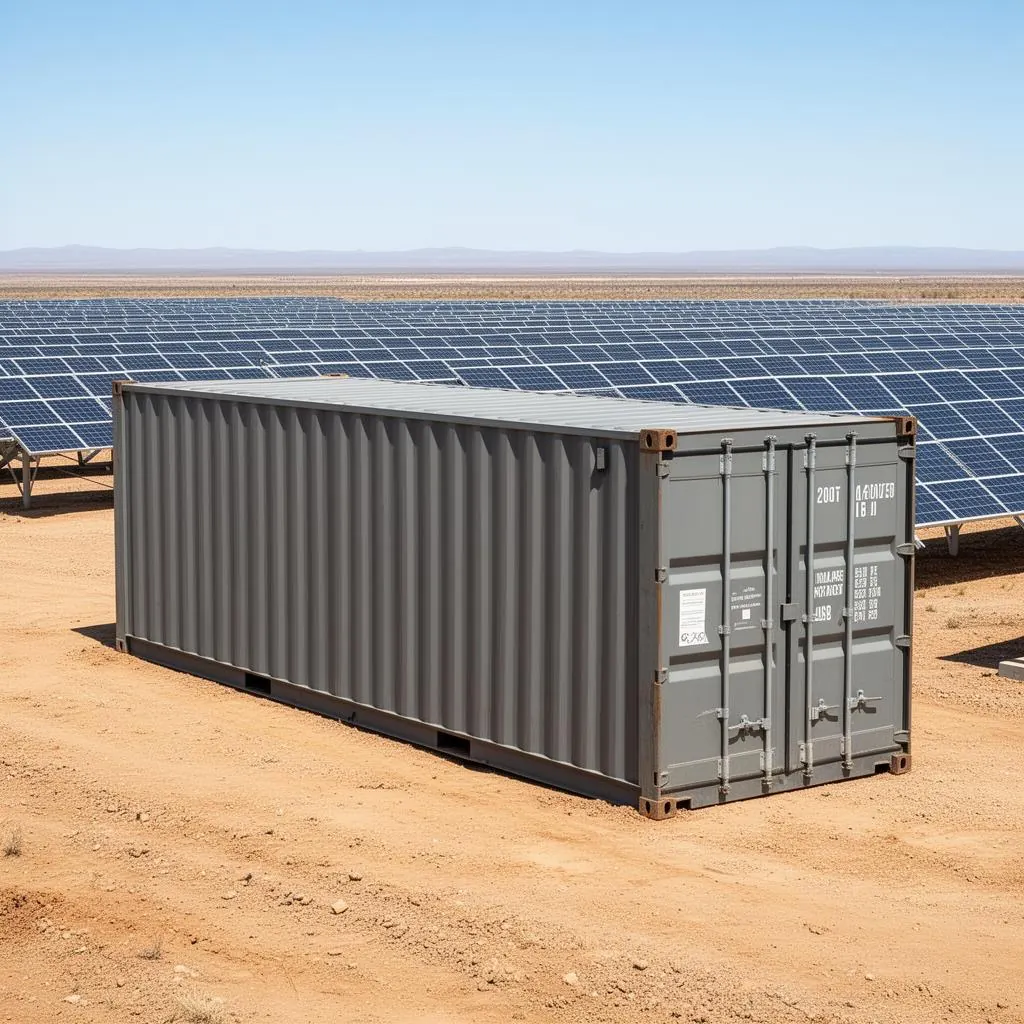 Use case
Solar Energy & Off-Grid Installations
Containerized battery storage systems, remote site equipment housing, and renewable energy project logistics.
Explore the use case Use case
Events & Brand Activations
Pop-up venues, hospitality units, and modular retail spaces for temporary brand experiences and events.
Explore the use case Use case
E-Commerce & Last-Mile Logistics
Overflow inventory management, temporary fulfilment hubs, and seasonal storage capacity for e-commerce operations.
Explore the use case Use case
Export & Import Freight Operations
One-way leasing strategy for freight forwarders and NVOCCs. Reduce repositioning costs while maintaining fleet flexibility.
Explore the use case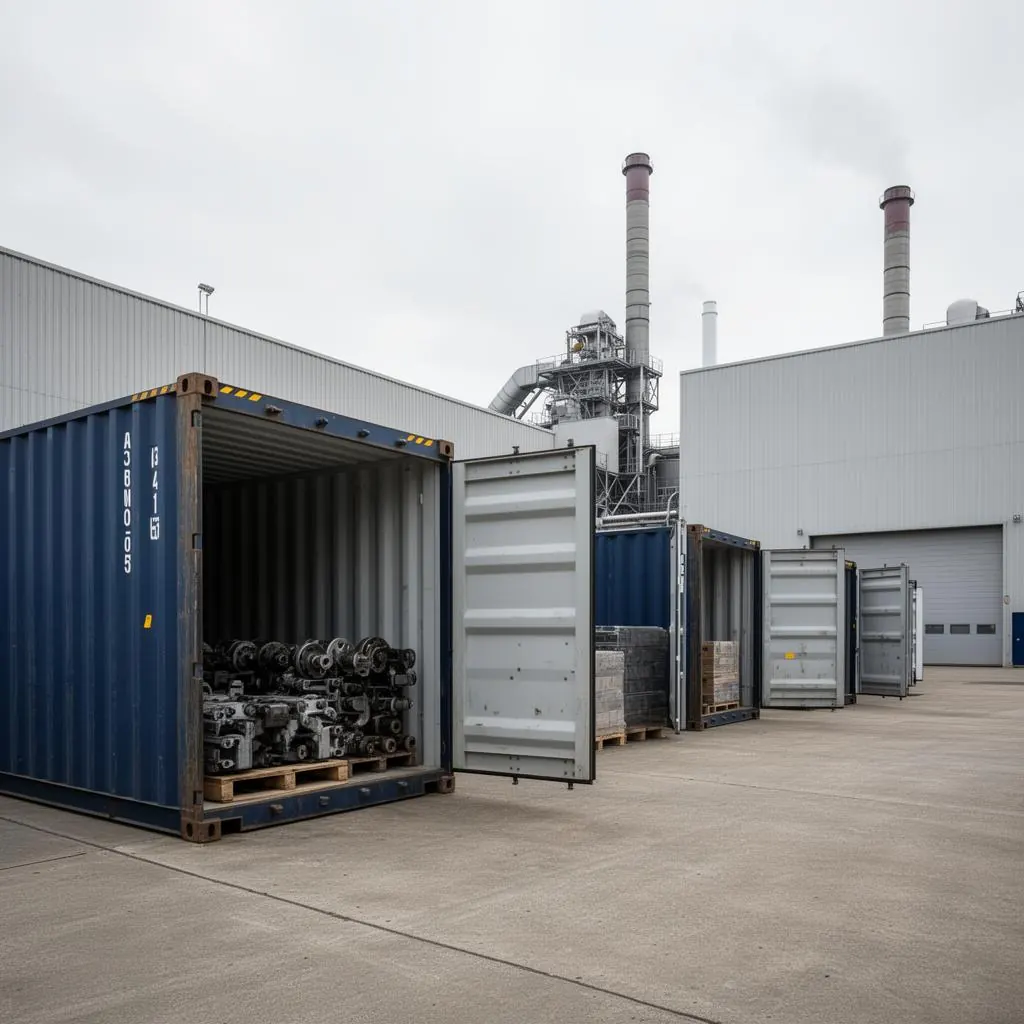 Use case
Industrial Storage & Depots
Long-term container deployments for industrial sites. Modular, scalable storage without permanent construction costs.
Explore the use case Use case
Humanitarian & Emergency Response
Rapid deployment container solutions for crisis zones, NGOs, and emergency logistics operations.
Explore the use case Use case
Military & Defense Logistics
Secure and reliable container solutions for defense operations and sensitive equipment transport.
Explore the use case Use case
Mining, Oil & Gas Operations
Robust container solutions for remote industrial sites and harsh environment deployments.
Explore the use case Use case
Agriculture, Farms & Ranches
Lockable storage for feed, seed and tools, container barns and farm workshops.
Explore the use case Use case
Workshops, Garages & Sheds
Lockable steel space for tools and trades, motorbike and equipment garages, garden sheds and hobby workshops.
Explore the use case
Explore
Guides and resources
Container Size Guide
Compare 20ft, 40ft and 40HC dimensions, capacities and use cases. Find the right size for your cargo.
Read the guideContainer Grades Explained
Understand the difference between New, IICL, CW, WWT and As-Is grades. Choose the right condition for your needs.
Read the guideCSC Plate Explained
What is a CSC plate, why it matters, and what to check before accepting a container for sea transport.
Read the guideOne-Way Leasing Explained
How SOC one-way leasing works, who it's for, and how it compares to round-trip leasing.
Read the guideBuying vs Leasing a Container
Full cost-of-ownership analysis and a decision framework to guide your procurement strategy.
Read the guide20DC vs 40HC: Which Format to Choose?
Dimensions, payload capacity, and cost-per-CBM comparison to select the right container format.
Read the guideSOC vs COC Leasing Explained
Understand the core difference between Shipper-Owned and Carrier-Owned container programs.
Read the guideNew vs Used Containers
Grade-by-grade analysis, price differentials, and practical fit criteria for equipment condition.
Read the guideCW vs WWT Containers
Compare Cargo Worthy (CW) and Wind & Watertight (WWT) shipping containers, inspection criteria, transport eligibility, storage suitability, US pricing and how to choose.
Read the guideOne Trip vs Cargo Worthy
One Trip vs Cargo Worthy shipping containers, lifespan, corrosion risk, appearance, ROI, US pricing and use cases to decide which grade fits your purchase.
Read the guideContainer Buying Guide
Step-by-step guide to buying a shipping container: grades, inspection, delivery and pricing.
Read the guideContainer Types Explained
Overview of standard container formats including dry, high cube, reefer, flat rack, and open top containers.
Read the guideWhat a Container's Colour Tells You
Colour records who owned the box, not its condition — and what you must not paint over.
Read the guideShipping Container Delivery Guide
Step-by-step shipping container delivery guide for US buyers, truck access requirements, tilt-bed vs crane offload, common delivery issues and a pre-delivery site checklist.
Read the guideShipping Container Foundation and Site Preparation
How to prepare the ground for a shipping container: gravel pad, concrete piers or slab foundation, leveling, drainage and delivery-vehicle access.
Read the guideContainer Scams: How to Verify a Seller Before You Pay
The seven fraud patterns in container trading, the signals that give them away, and a twenty-minute verification procedure.
Read the guideInland Container Depots: How They Work
What an inland depot does, how it differs from a port terminal, what it charges for, and how to choose one for pickup or drop-off.
Read the guideContainer Loading Calculator
Estimate the volume, weight and floor space of your items to compare a 20DC and a 40HC.
Read the guideShipping Container Ventilation and Condensation
Why containers sweat and how vents, desiccant and insulation keep stored goods dry.
Read the guideShipping Container Carports: Two Containers and a Roof
Spans, roof kits, clearance, anchoring and permits for a covered bay between two containers.
Read the guideCSC Certificate vs Seaworthy Certificate: What Each One Proves
CSC approval and seaworthy (cargo worthy) certificates answer different questions: who issues each, what they cover, how long they last, which you need.
Read the guideShipping Container Prices in the USA
Indicative ex-depot ranges by size, grade and city, reviewed monthly, and what a quote should include.
Read the guide
Explore
More market notes
 Market
One record from release to invoice: how MG-Atlantic runs its operations on Krak Stack
Leasing, trading, releases, returns and invoicing on one container record: why MG-Atlantic runs all of its container operations on Krak Stack.
Read the note Market
Why an international trader is opening a container shop in Switzerland
MG-Atlantic launches MG Container, its Swiss shop: new and used containers, to buy or to rent, delivered customs-cleared anywhere in Switzerland.
Read the note Market
September's Import Peak, and What It Leaves Inland
US imports were forecast to peak in September 2026. Where those boxes are emptied, why the inland pool of empties follows weeks later, and what it means for buyers.
Read the note Market
Panama Rations Transits, and Equipment Follows
The canal cut daily transits to 32 and lowered Neopanamax draft. What a water-driven restriction does to container repositioning, and where empties accumulate.
Read the note Market
What a Depot Actually Charges For
Gate fees, lifts, per-day storage, survey, cleaning, repair — what a container depot invoices, and why the same box costs more to keep in one port than another.
Read the note Market
Cape Routing and Container Availability
When vessels route around the Cape instead of through Suez, the equipment consequences outlast the schedule ones. What longer rotations do to container availability, and how to plan around them.
Read the note Market
Why Container Availability Differs by Port
Containers accumulate where cargo arrives and disappear where it departs. How trade imbalance shapes what you can actually collect, port by port.
Read the note Market
The Container Availability Calendar
Container supply moves on a predictable annual rhythm — pre-holiday export rushes, factory shutdowns, and the quiet weeks that follow. What to plan around.
Read the note